
In this guide5 sections
Before a fragrance is a bottle on a shelf, it is a place. For a great deal of the floral perfumery loved today, that place is Grasse.
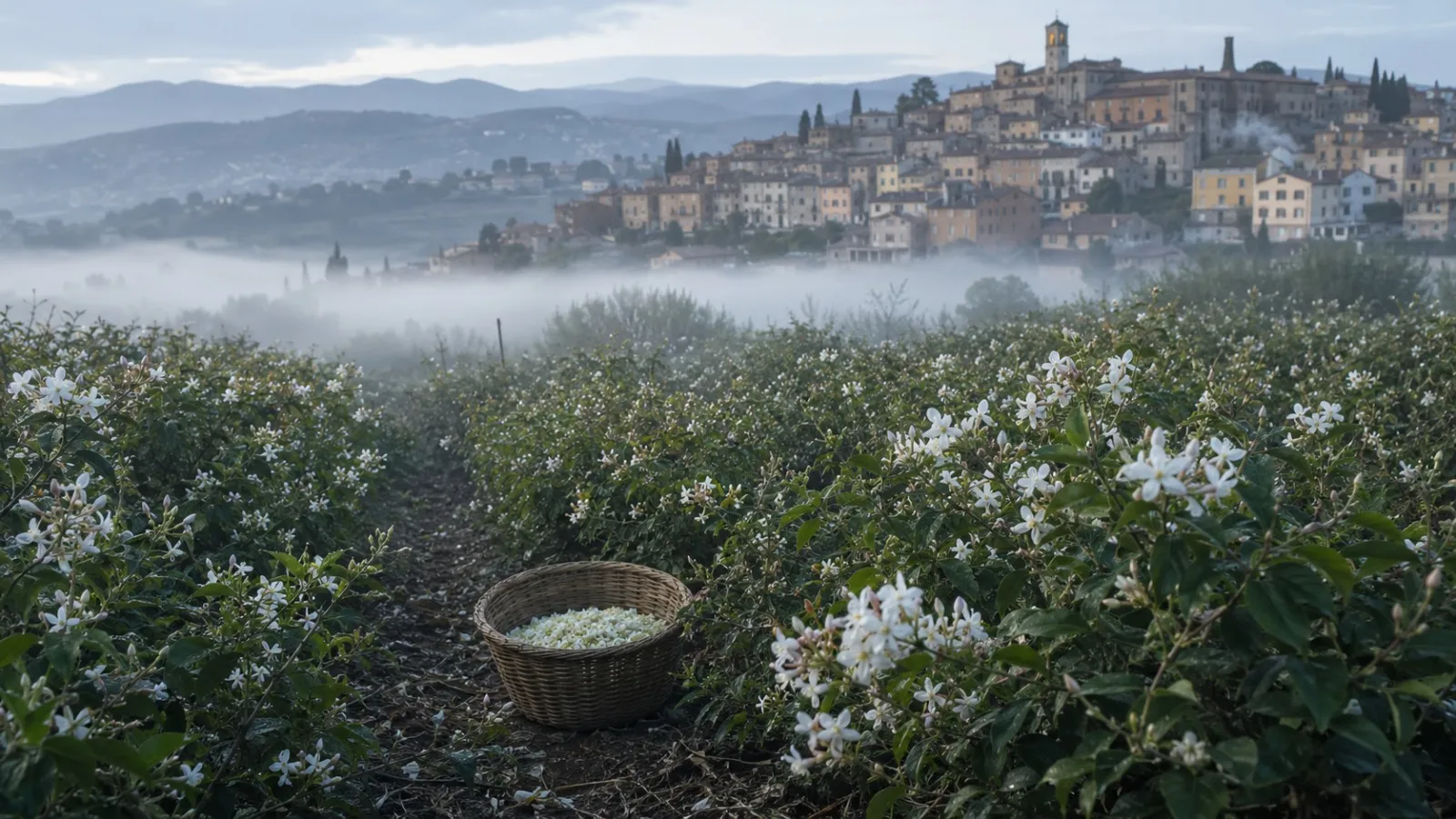
Grasse is a town in the hills of Provence, in southeastern France, and it has been tied to the making of perfume for centuries. Its name is a kind of shorthand for a whole tradition: flowers grown in a warm, sheltered climate, harvested by hand, and turned into the raw materials that composers reach for when they want a scent to feel soft, luminous, and alive. If you are drawn to jasmine, rose, and orange blossom, you are, in a sense, drawn to Grasse.
This guide is the first in the LuxeSkinDaily fragrance atlas — a growing set of origin guides that look at where perfume materials come from and why place matters.
Why Grasse became a capital of perfume
Grasse did not begin as a town of flowers. It began as a town of leather.
In the Middle Ages, Grasse was known for tanning and glove-making. Leather of the period carried a strong odour, and a fashion took hold — particularly from the sixteenth century — for scented gloves that masked it with perfume. As demand for those fragrant gloves grew, the perfuming side of the trade grew with it. Over time, the scent outlasted the leather, and Grasse reoriented itself around perfumery.
The town had a natural advantage. The surrounding land and mild, sheltered climate suited the cultivation of fragrant flowers, and growers built up generations of knowledge about how to raise, pick, and process them. That combination — a ready market, the right growing conditions, and deep local craft — is what turned a Provençal town into a reference point for the whole industry.
The flowers Grasse is known for
Several materials are closely associated with the region. Each contributes a different facet, which is part of why Grasse is linked to such a wide range of floral compositions rather than a single signature.
Jasmine is perhaps the most emblematic. Grasse jasmine is prized for a rich, warm, slightly fruity character that can range from airy to deep and creamy. It is delicate to work with, which is part of why it carries such prestige.
Rose de Mai — the May rose, Rosa centifolia — is harvested, as the name suggests, in spring. It gives a fresh, honeyed, softly green rose note that feels quite different from the sharper, more modern roses in some fragrances.
Tuberose brings a creamy, opulent, white-floral intensity. It is one of the more dramatic materials on this list and tends to define a fragrance rather than sit quietly within it.
Orange blossom and neroli, drawn from the bitter orange tree, add a bright, clean, gently floral lift that bridges the citrus and floral worlds.
How the harvest shapes the scent
A material’s quality is decided long before it reaches a perfumer’s bench. With Grasse flowers, timing and handling matter enormously.
Many of these blooms are picked by hand, and often early in the day, because their scent is most concentrated before the heat builds. The harvest follows the seasons closely: the May rose in spring, jasmine in the warmer months toward late summer and early autumn. Because the flowers are fragile and their scent fleeting, they are processed quickly after picking.
Traditional and modern techniques — from distillation to solvent extraction — are used to capture that scent as concentrated essences and absolutes. The result is a raw material with far more depth and nuance than a synthetic approximation alone, which is a large part of why naturally grown Grasse materials remain so valued.
A recognised craft, not just a marketing story
The heritage around Grasse is more than reputation. In 2018, UNESCO added the skills related to perfume in the Pays de Grasse to its Representative List of the Intangible Cultural Heritage of Humanity. The listing recognises three linked skills: the cultivation of perfume plants, the knowledge and processing of natural raw materials, and the art of composing a perfume.
That recognition is a useful reminder for anyone exploring fragrance: much of what makes a scent feel refined is craft and provenance, not packaging.
If Grasse is your kind of scent
In the LuxeSkinDaily Fragrance Finder, Grasse is the origin matched to the Floral Romantic profile — a leaning toward soft, luminous, expressive florals. If that sounds like you, a few next steps are worth taking.
Start by learning how to try fragrances properly, so a floral has room to develop on your skin before you judge it, in our guide on how to sample luxury fragrance. If you are building a small collection, how to build a fragrance wardrobe will help you place a floral alongside your other scents. And because delicate florals are sensitive to light and heat, it is worth reading how to store perfume correctly to keep them true.
Not sure a floral is your direction? Take the Fragrance Finder to see which of the six profiles fits you, or open the Fragrance Atlas to explore the other origins — from bergamot in Calabria to vanilla in Madagascar, covered in our vanilla fragrance guide.
Grasse is only the first origin on the map. More region guides will follow as the atlas grows.