
In this guide5 sections
Before a fragrance is a bottle on a shelf, it is a place. For the smooth, creamy heart of woody perfumery, that place is a city in the hills of southern India whose name became the material’s own.
Mysore, in the state of Karnataka, has been associated with sandalwood for centuries — so closely that “Mysore sandalwood” is less a label than a legend. The oil drawn from these slow-growing trees is prized for a softness no other wood quite matches: milky, warm, meditative, closer to skin than to timber. If you are drawn to fragrances that feel composed, quiet, and lasting, this is the origin behind that feeling.
This guide is part of the LuxeSkinDaily fragrance atlas — a growing set of origin guides that look at where perfume materials come from and why place matters.
A tree unlike other trees
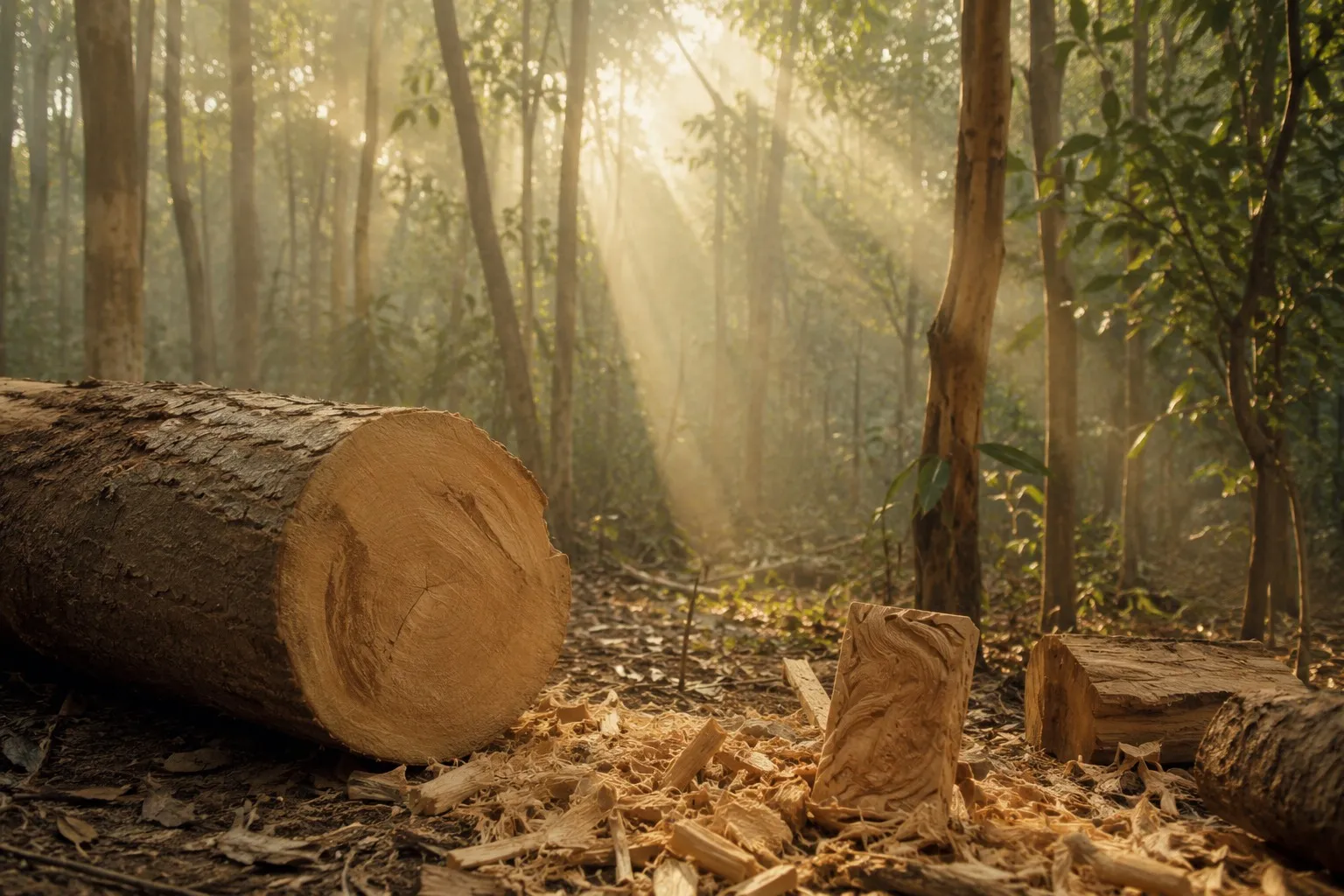
Indian sandalwood, Santalum album, is a strange and patient plant. It is hemiparasitic — its roots tap into those of neighbouring trees to draw part of its nourishment — and it hoards its treasure slowly. The fragrant oil forms in the heartwood, the dense core of the trunk, and in the roots, deepening as the tree matures over decades.
That biology explains almost everything about sandalwood’s status. A young tree offers little; the material improves with age in a way few crops do. Unlike flowers harvested each spring, a sandalwood tree is a long-term commitment measured in generations. The regions around Mysore, with the right climate and soils, historically produced heartwood of exceptional richness — and the old princely state took the resource seriously enough to manage and protect it, a control that continues under Indian state regulation today.
The character of sandalwood
Most woods in perfumery are dry: cedar is pencil-shaving crisp, vetiver earthy and rooty. Sandalwood is the great exception — a wood that behaves like a cream.
Good sandalwood oil is smooth, warm, and lactonic, with a soft sweetness and a faintly balsamic depth. It has remarkable tenacity, lingering on skin long after brighter notes have gone, yet it never shouts. Perfumers use it both as a soloist and as an invisible craftsman: it rounds sharp edges, extends other notes, and gives compositions the polished, seamless quality associated with expensive perfumery.
In the woody family, it is the difference between a scent that smells of wood and one that feels like it was carved and sanded by hand.
Scarcity, craft, and the modern reality
The fame of Mysore sandalwood eventually became its burden. A tree that takes decades to mature could not keep pace with world demand, and overharvesting pushed Indian sandalwood into scarcity. India now regulates the resource strictly, and genuine old-stock Mysore oil has become one of the rarest materials in perfumery.
The industry adapted honestly and otherwise. Plantations of Santalum album in Australia now supply much of the fine-fragrance market, and high-quality synthetic sandalwood molecules carry the note in many modern compositions. None of this is a scandal — it is how a craft survives its own success — but it rewards an informed nose. When a fragrance today evokes “Mysore sandalwood,” it is usually invoking a benchmark: the creamy ideal against which every sandalwood note, natural or synthetic, is still measured.
Older than perfume bottles
Long before European perfumery adopted it, sandalwood was woven into Indian life. The wood and its paste have ancient roles in ritual and temple craft, and sandalwood is a foundation of the attar tradition — India’s own school of botanical perfumery, in which materials are distilled into oil bases and worn on skin.
That history matters for how the note reads. Sandalwood carries associations of calm, ceremony, and permanence that are cultural as much as olfactory. A woody fragrance built on it borrows not just a smell but a temperament — which is perhaps why the profile it matches is called sophisticate rather than simply “woody.”
If Mysore is your kind of scent
In the LuxeSkinDaily Fragrance Finder, Mysore is the origin matched to the Woody Sophisticate profile — a leaning toward polished, grounded scents with quiet authority. If that sounds like you, a few next steps are worth taking.
Woody bases reveal themselves slowly, so judge them at the end of a wear, not the start — our guide on how to sample luxury fragrance explains how. A signature this steady also anchors a collection well; see how to build a fragrance wardrobe for pairing it with brighter choices. And to keep a treasured woody true for years, read how to store perfume correctly.
Not sure a woody is your direction? Take the Fragrance Finder to see which of the six profiles fits you, or open the Fragrance Atlas to explore the other origins — from vanilla in Madagascar to the oud traditions of the Arabian Peninsula.
Mysore’s trees measure their worth in decades. The scents they inspired ask only that you slow down enough to notice.