
In this guide5 sections
Before a fragrance is a bottle on a shelf, it is a place. For the sunlit, green, herb-brushed side of perfumery, that place is an island in the middle of the Mediterranean.
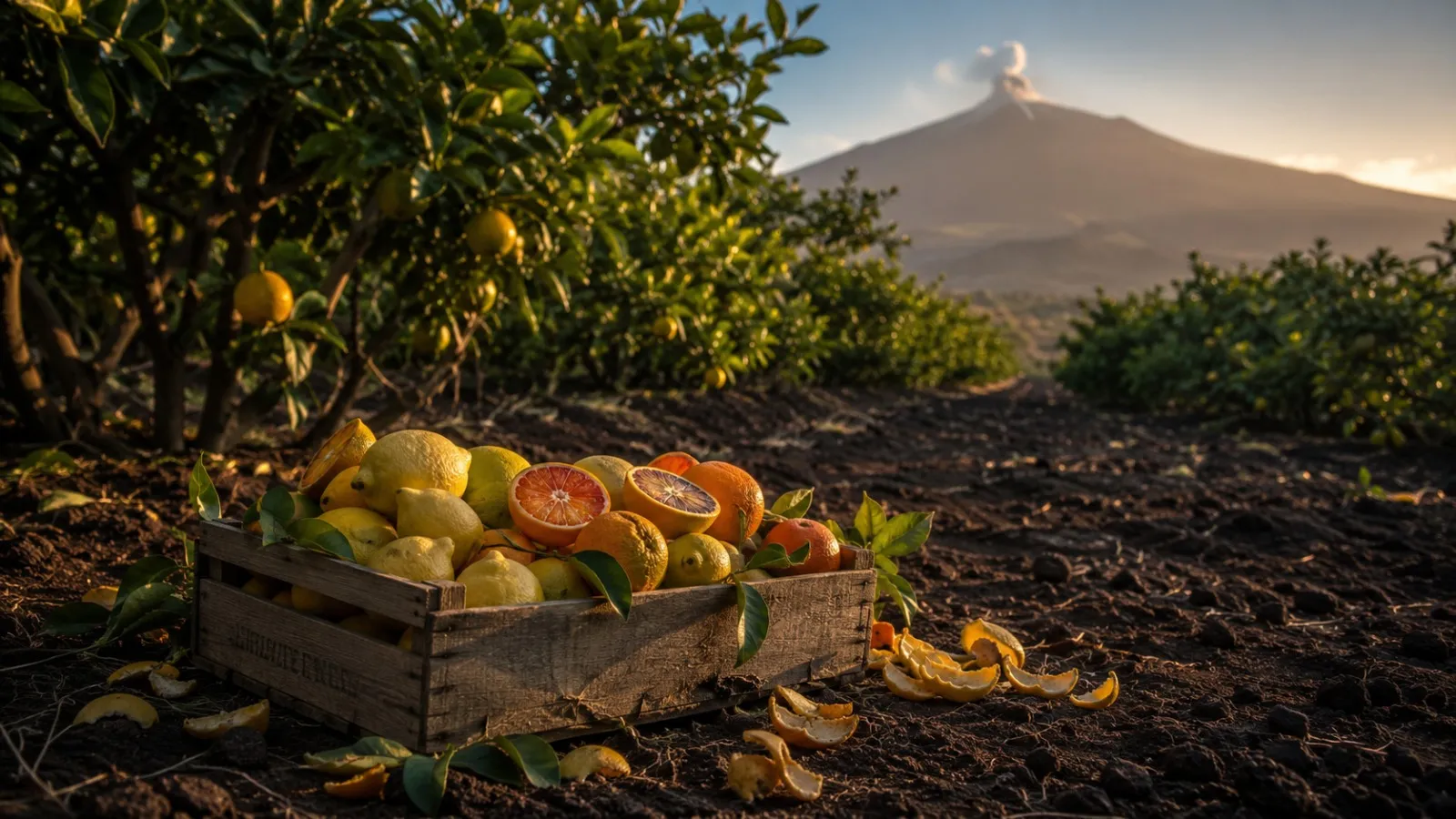
Sicily has grown citrus for the better part of a millennium. Lemons, bitter oranges, and mandarins line its coastal plains, and the scent of their blossom — the zagara, as Sicilians call it — is as much a part of the island’s identity as its volcanoes and its baroque towns. When a fragrance smells of crushed leaves, sun-warmed peel, and white blossom carried on dry air, it is borrowing Sicily’s vocabulary.
This guide is part of the LuxeSkinDaily fragrance atlas — a growing set of origin guides that look at where perfume materials come from and why place matters.
How citrus came to the island
Sicily’s citrus story begins with its conquerors. Arab settlers in the medieval period brought sophisticated irrigation and new crops to the island, among them the bitter orange and the lemon. The groves they planted around Palermo — a landscape so lush it became known as the Conca d’Oro, the golden shell — set a pattern of cultivation that spread along the coasts.
Centuries later, that inheritance is still visible. Sicilian lemons and blood oranges carry protected geographical designations within the European Union, and citrus remains one of the island’s signature crops. What matters for fragrance is the depth of the tradition: generations of growers learning which trees thrive on volcanic soil, how sea air and strong sun concentrate an oil, and when a fruit or a flower gives its best.
Where Calabria, just across the strait, concentrated on a single fruit, Sicily’s gift to perfumery is breadth — peel, blossom, leaf, and twig, each with its own material.
One tree, several scents
Part of what makes citrus so central to perfumery is that a single tree offers several different raw materials, and Sicily’s groves supply the classic examples.
Lemon gives the brightest of them: a sharp, sparkling, instantly recognisable freshness pressed from the peel. Sicilian lemon is a reference point for that clean, sunlit opening so many fragrances reach for.
Bitter orange is the perfumer’s orange — too sour to eat, endlessly useful to smell. Its peel gives a drier, more elegant citrus than the sweet orange of the fruit bowl.
Orange blossom comes from the flowers of that same bitter orange tree. Extracted with solvents it becomes a rich, heady absolute; distilled, it becomes neroli — lighter, greener, more transparent. Between them they bridge the citrus and floral worlds.
Petitgrain, distilled from the leaves and twigs, adds the green, faintly bitter, freshly-snapped-stem character that gives aromatic compositions their natural, outdoors feel.
How the harvest shapes the scent
Citrus materials are defined by freshness, and freshness is a matter of handling.
Peel oils are cold-pressed rather than distilled, because heat flattens exactly the liveliness that makes them valuable. The blossom harvest is a spring affair, and the flowers — like the jasmine of Grasse — are delicate, picked and processed quickly before their scent fades. Leaves and twigs for petitgrain are hardier, but even they reward careful timing.
The island itself does quiet work in the background. Strong sun, mineral-rich volcanic soils around Etna, and the temper of the surrounding sea all shape the fruit before any craftsman touches it. It is a reminder that in perfumery, terroir is not a borrowed wine word — it describes something you can genuinely smell.
An identity written in blossom
The Sicilians have a word for the smell of their island in spring: zagara, the citrus blossom, a name that arrived with the Arabic language centuries ago and never left. That a scent has its own word in the local vocabulary says something no advertisement can.
For anyone exploring fragrance, Sicily is a lesson in how a landscape becomes a style. Green, aromatic perfumery — the family of scents built on citrus, herbs, and leaves — is essentially the Mediterranean coastline translated into a bottle. When it is done well, the reference is not an abstract “freshness” but a real place with real groves.
If Sicily is your kind of scent
In the LuxeSkinDaily Fragrance Finder, Sicily is the origin matched to the Green Aromatic profile — a leaning toward natural, textured scents of citrus, herbs, and leaves. If that sounds like you, a few next steps are worth taking.
Aromatic scents change character as they dry down from that green opening, so give them time on skin using our guide on how to sample luxury fragrance. Citrus materials are fragile, which makes how to store perfume correctly essential reading for this profile. And how to build a fragrance wardrobe will help you decide where a green aromatic sits alongside warmer choices.
Not sure a green aromatic is your direction? Take the Fragrance Finder to see which of the six profiles fits you, or open the Fragrance Atlas to explore the other origins — from bergamot across the strait in Calabria to the flower fields of Grasse.
Sicily’s groves have scented the Mediterranean for centuries. A good aromatic fragrance simply lets you carry a little of that coastline with you.